03
Industrial Design
BRAKING SYSTEM
Bicycle safety for children
A power-assisted brake that harnesses wheel kinetic energy so children can stop a bicycle with a fraction of the force.
Project Brief
The brief: how to make bike brakes easier for children to use. This group project set out to redesign bicycle braking so a child can stop safely with limited hand strength.
Ineffective Brakes
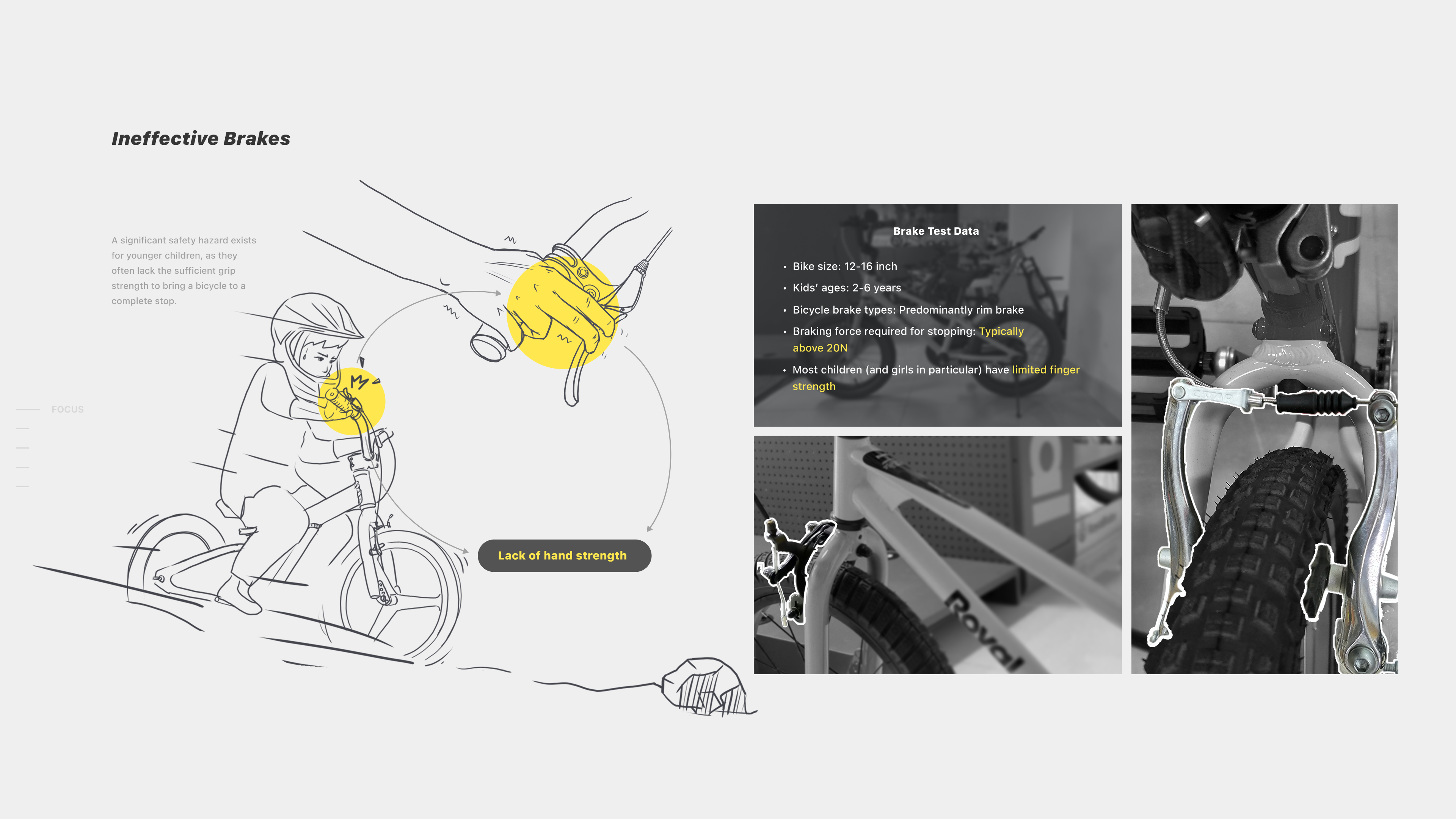
Younger children often lack the grip strength to bring a bicycle to a complete stop. Brake-test data shows kids on 12–16" bikes, aged 2–8, typically need more than 20N of force — beyond the hand strength most children, and girls in particular, can apply.
Design Concept
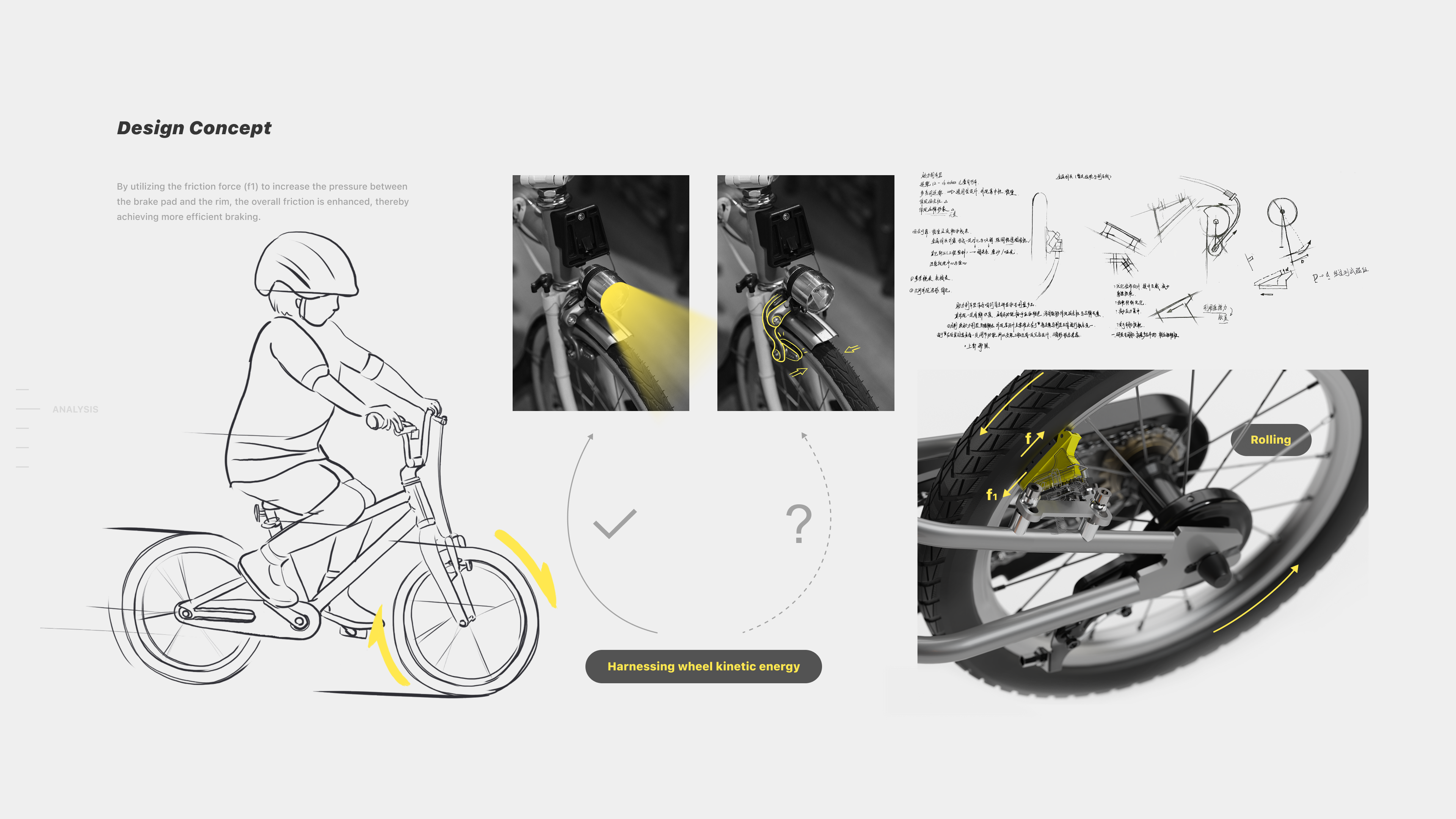
By using the friction force between the brake pad and the rim, the mechanism increases pressure to boost overall braking. The device harnesses the wheel’s kinetic energy as it rolls, converting forward motion into braking force.
Concept Sketches
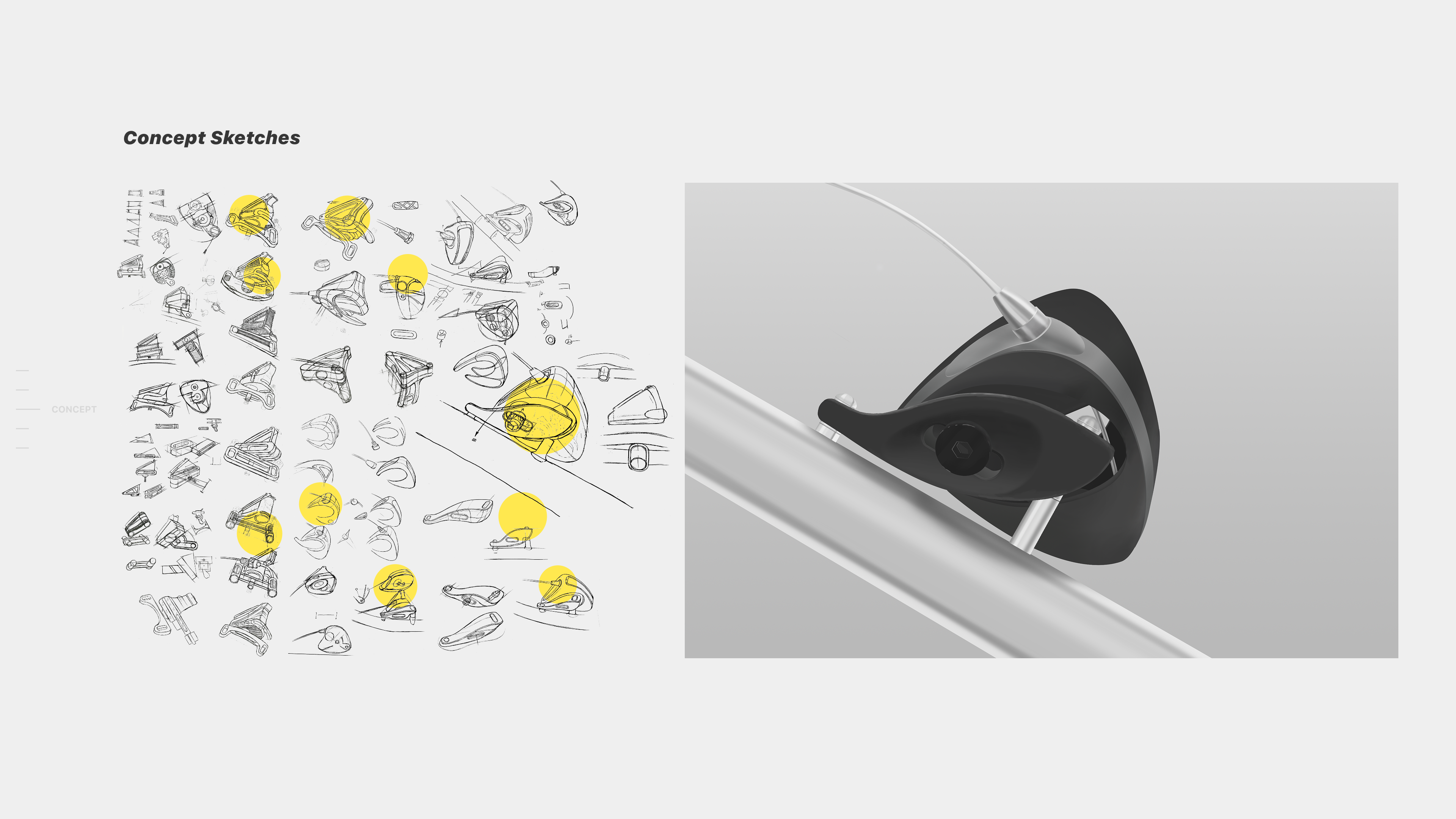
A wide range of form studies explored the mechanism’s shape and how it sits close to the rim. Selected ideas were carried into a three-dimensional prototype to test the geometry.
Validation and Optimization
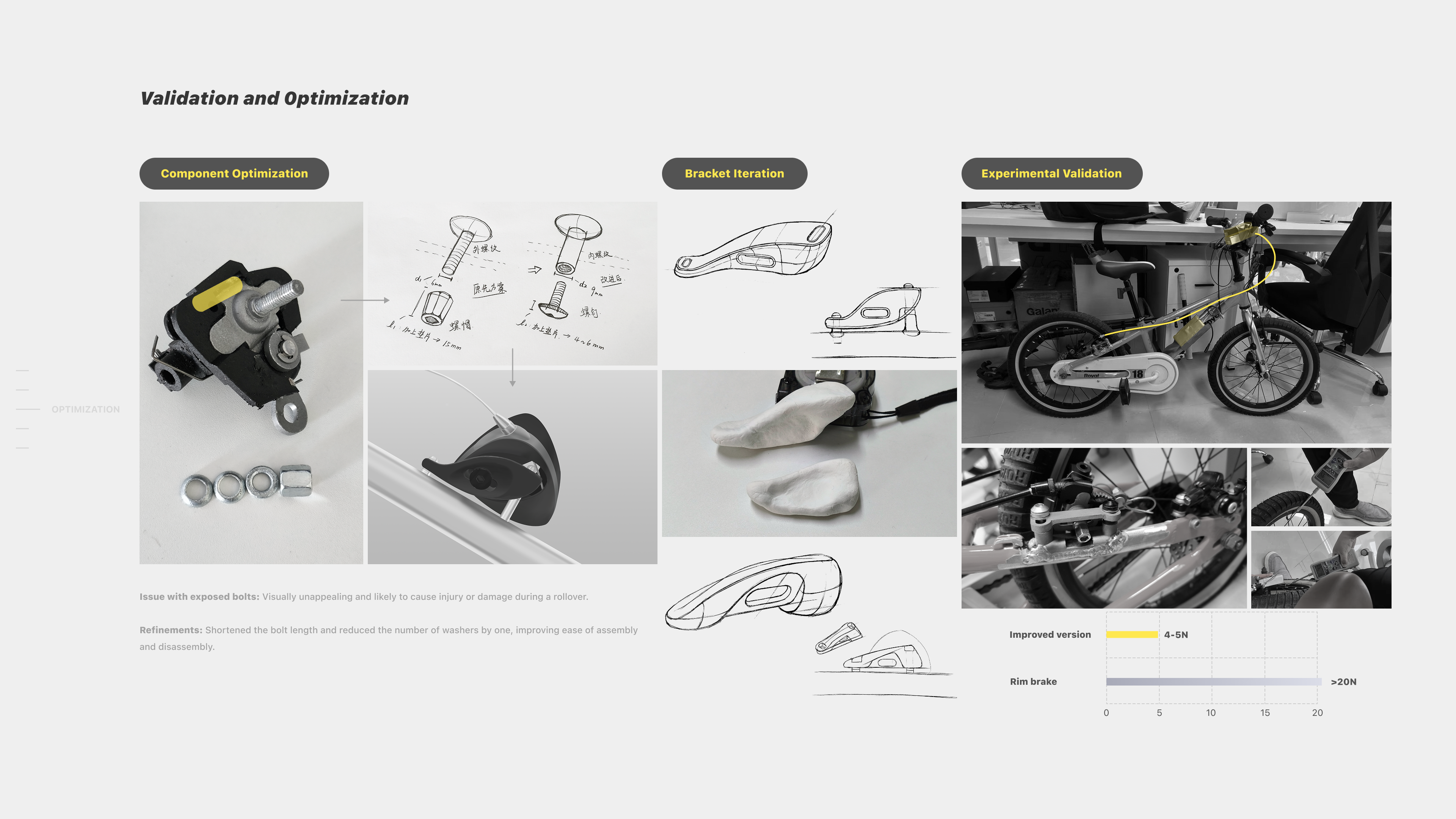
- Braking force
- 4–5 N (improved)
- Rim brake baseline
- >20 N
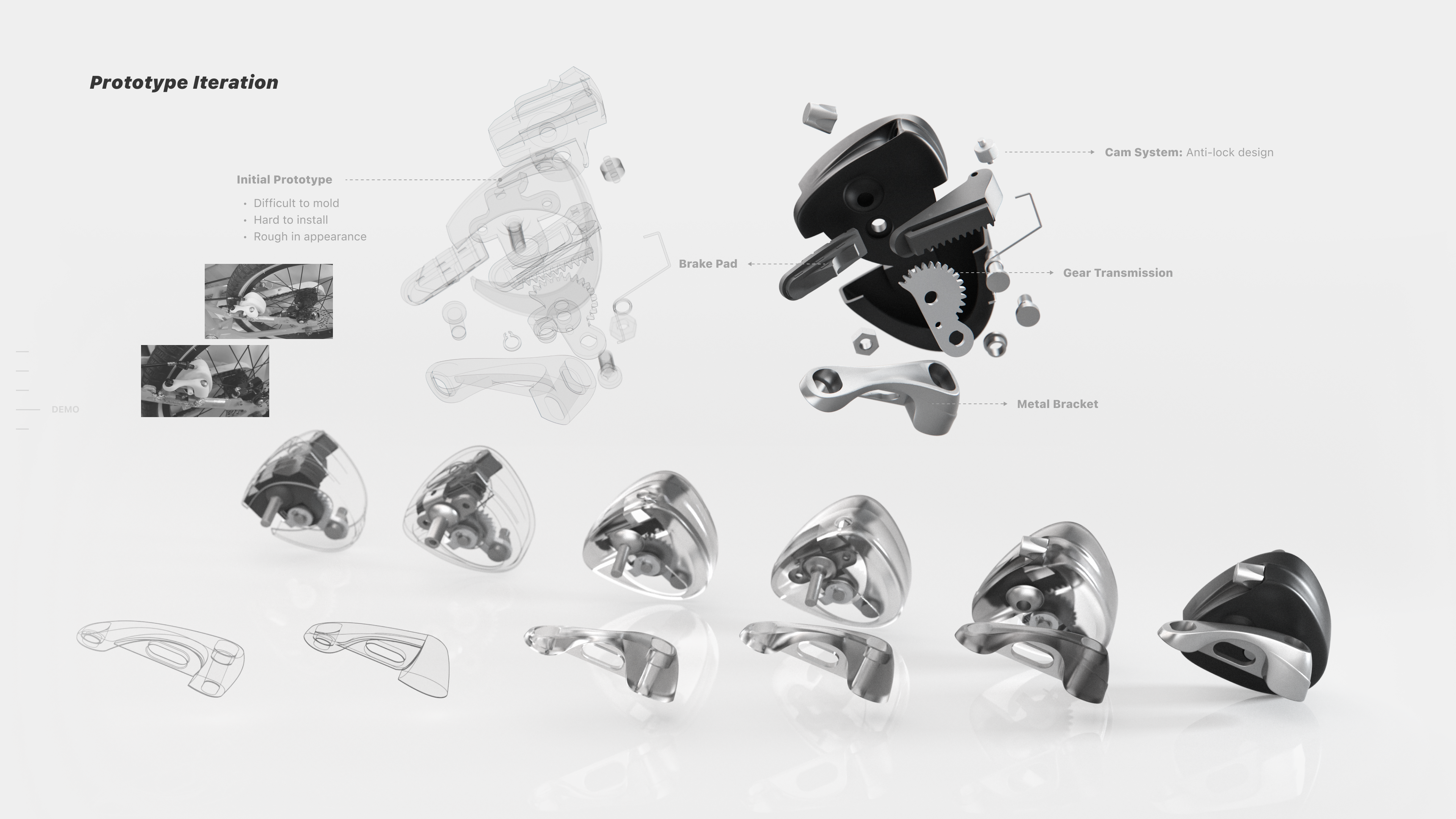
- Cam system
- Anti-lock design
- Transmission
- Gear driven
Prototype Iteration
The initial prototype was hard to mould, difficult to install, and rough in appearance. The exploded view shows the refined arrangement of the brake pad, cam system, gear transmission, and metal bracket.
Product Demonstration
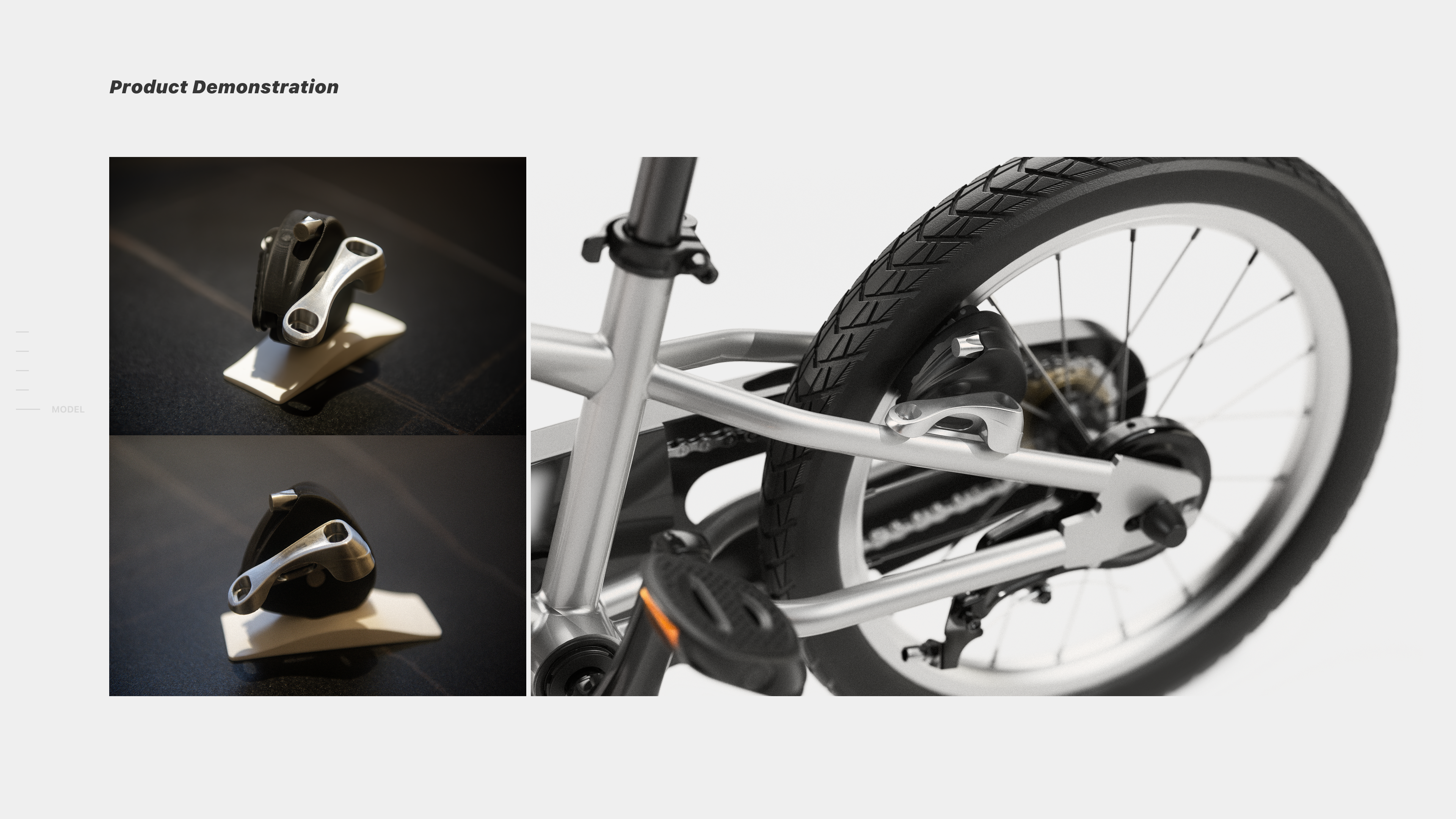
The finished mechanism mounts beside the rear wheel rim and engages as the wheel turns. It is shown installed on a child’s bike, with close-ups of the assembled unit.