05
Industrial Design
DESL
Auxiliary devices to help strengthen arms and hands
A set of upper-limb assistive devices — an exoskeleton with rehabilitation and daily-assist modes, plus an adaptive prosthetic hand — that help people with upper limb defects live a better life.
Project Brief
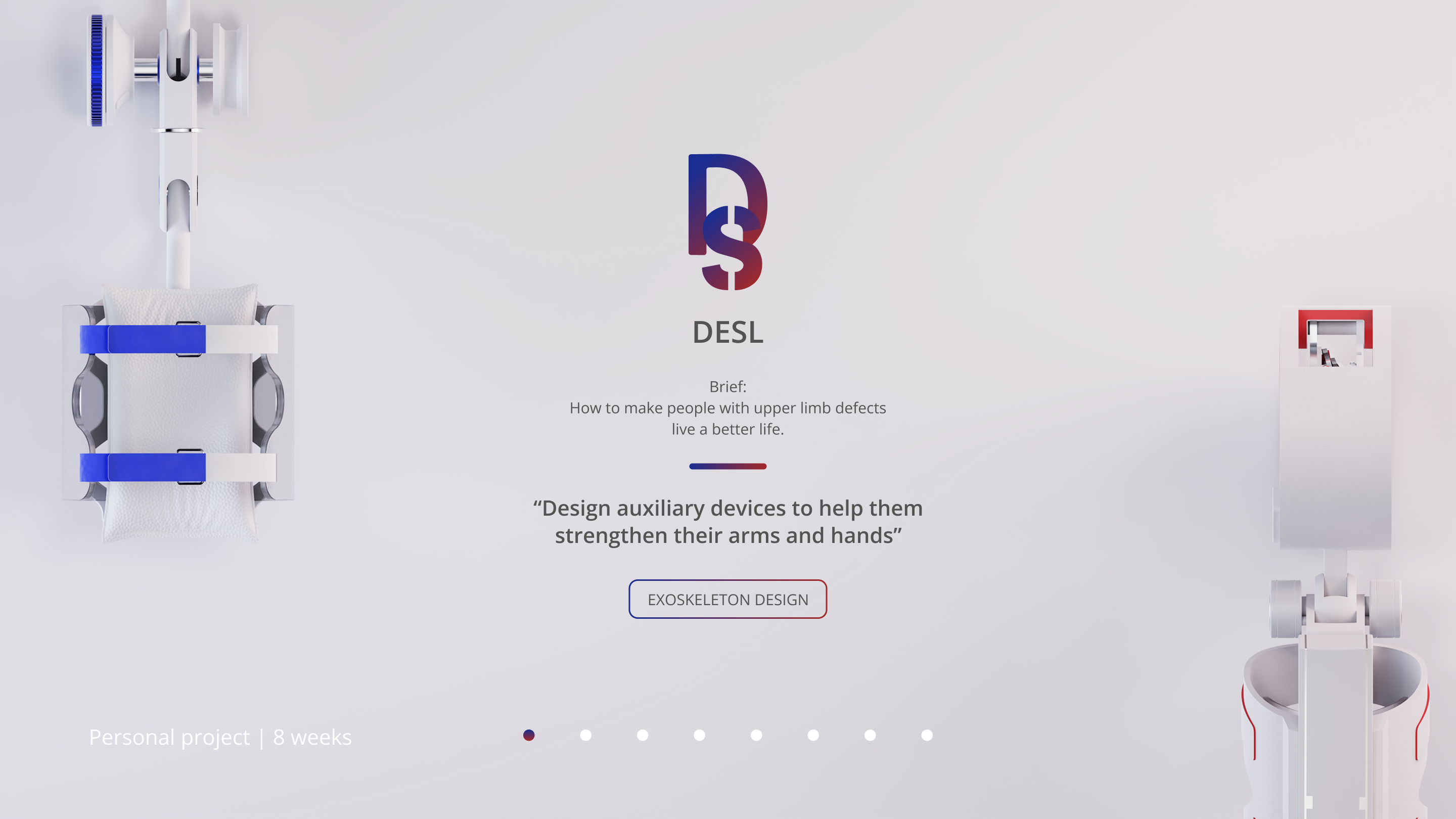
DESL is a personal, eight-week project asking how to make people with upper limb defects live a better life — by designing auxiliary devices that help them strengthen their arms and hands.
Exoskeleton Background
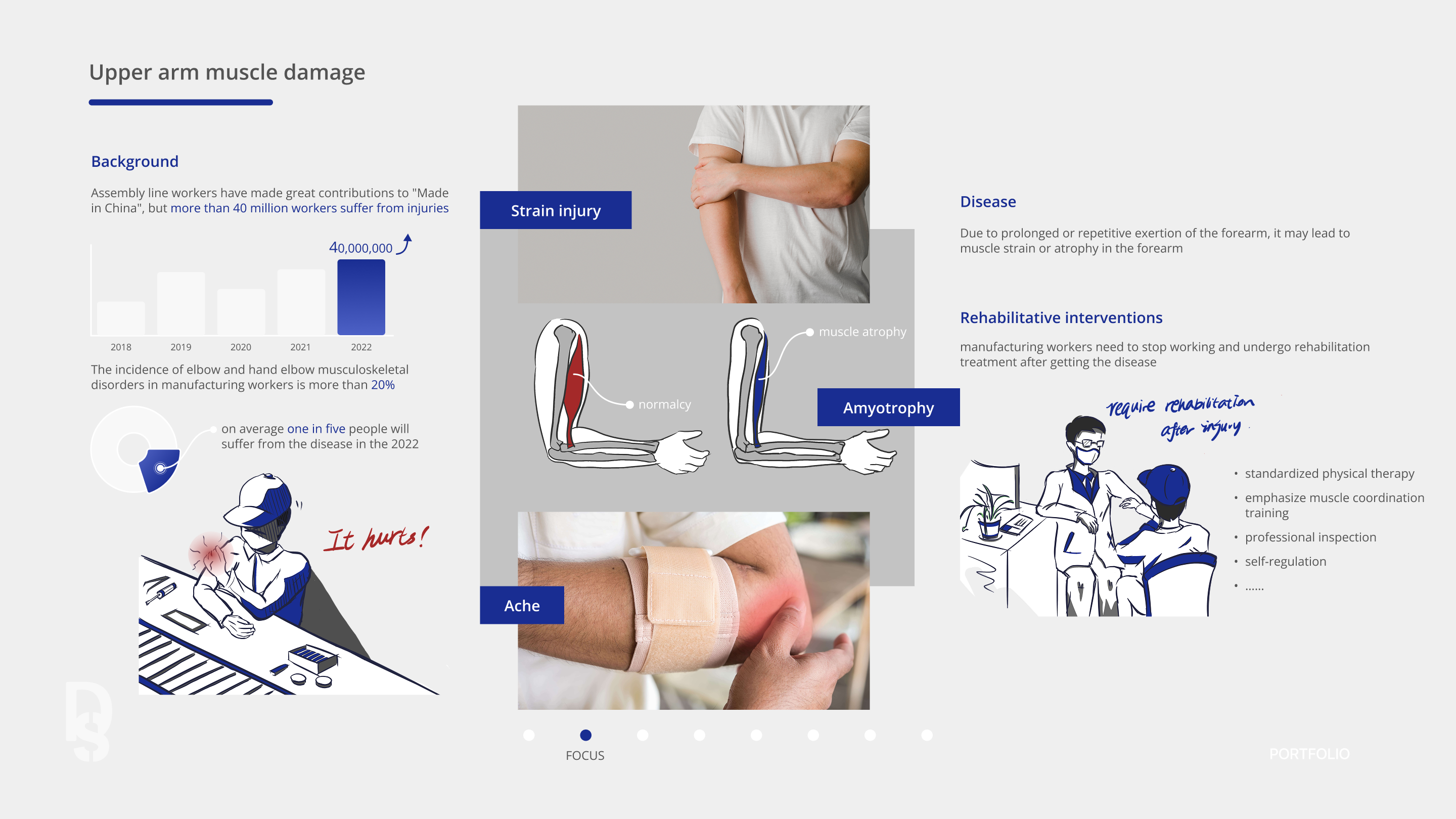
Prolonged or repetitive forearm exertion causes strain or atrophy among assembly workers — over 40 million have been injured, and more than 20% develop elbow and hand musculoskeletal disorders, forcing them to stop work for rehabilitation.
Problems in Rehabilitation
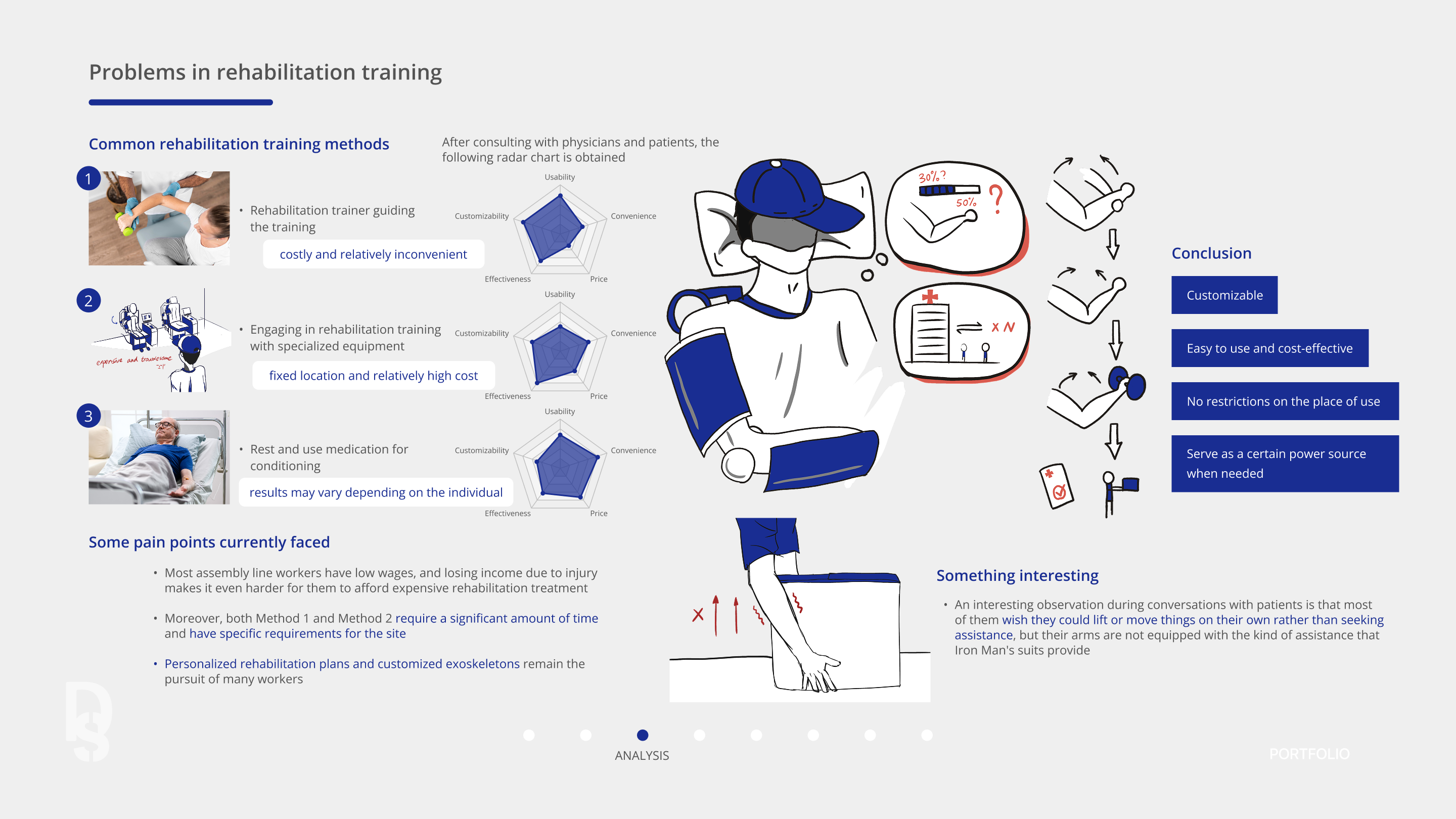
Specialized rehab equipment is fixed, costly, and site-bound; rest with medication is convenient but inconsistent. Low-income workers can't afford either, so the device must be customizable, affordable, easy to use, and usable anywhere — providing power when needed.
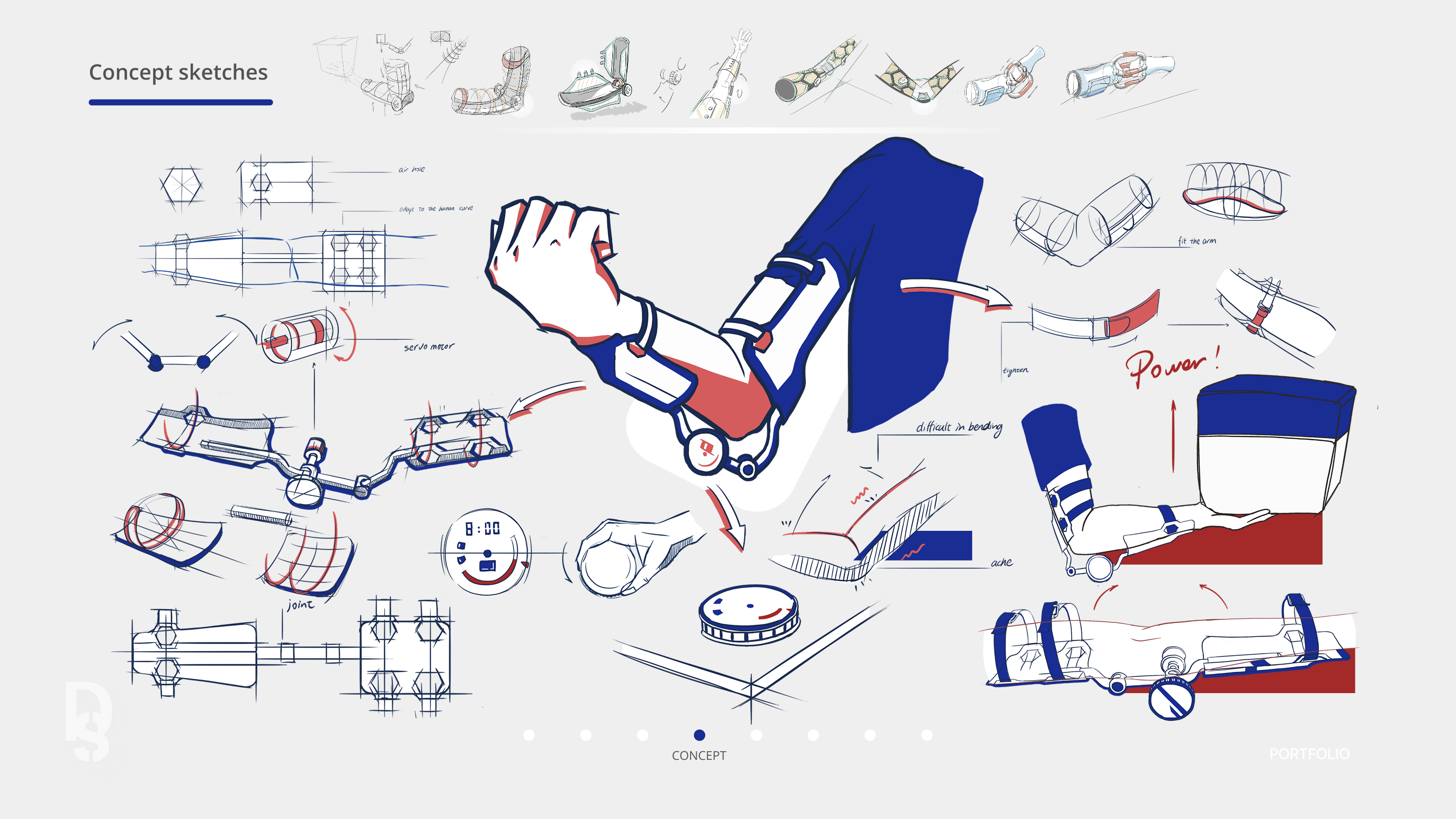
Concept Sketches
A wide range of concept sketches explored the exoskeleton form and how it wraps the arm.
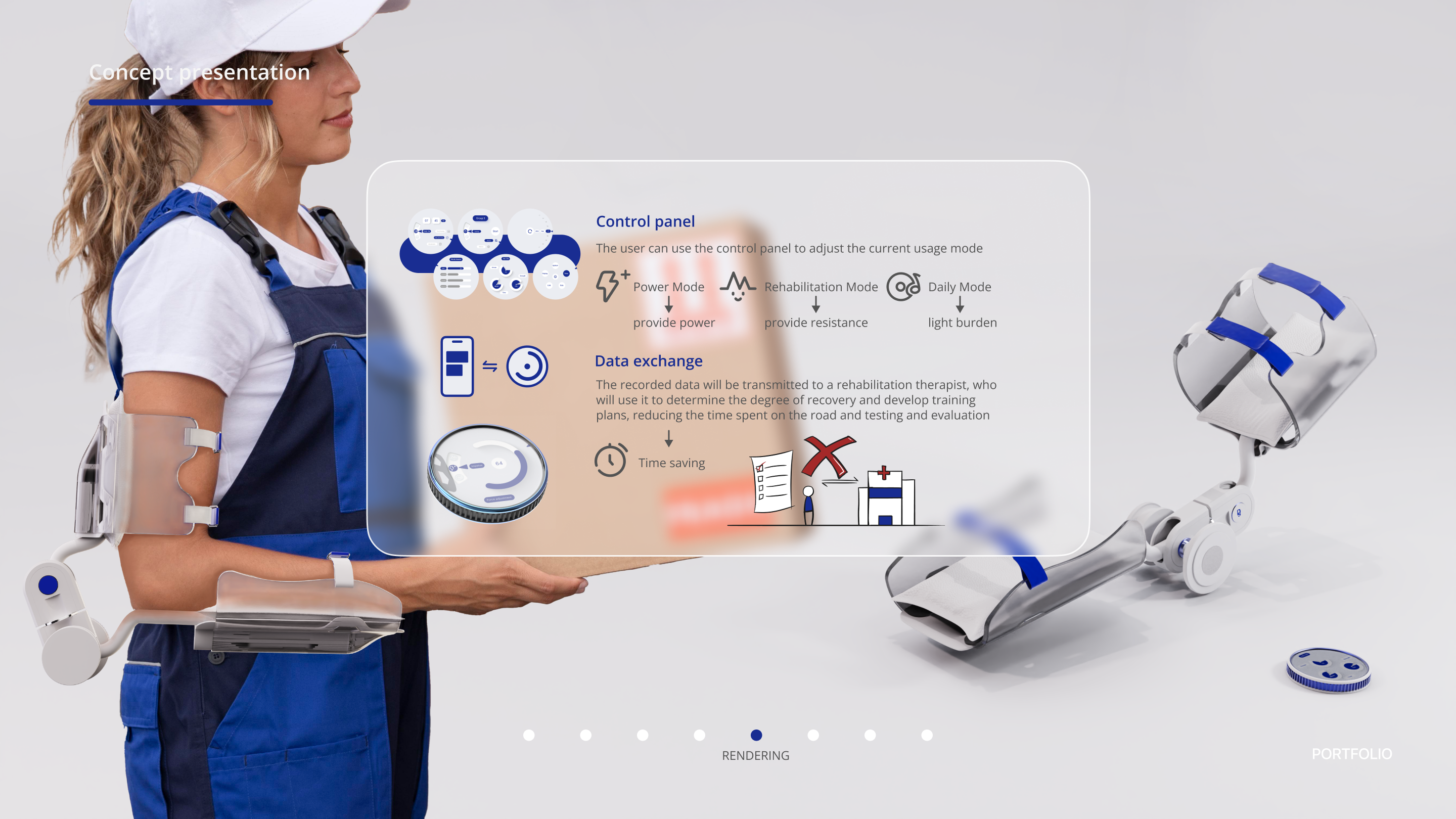
Control Panel and Modes
A control panel switches modes: Rehabilitation Mode provides resistance, Daily Mode provides power with a light burden. Recorded data goes to the therapist to track recovery and plan training, cutting travel and testing time.
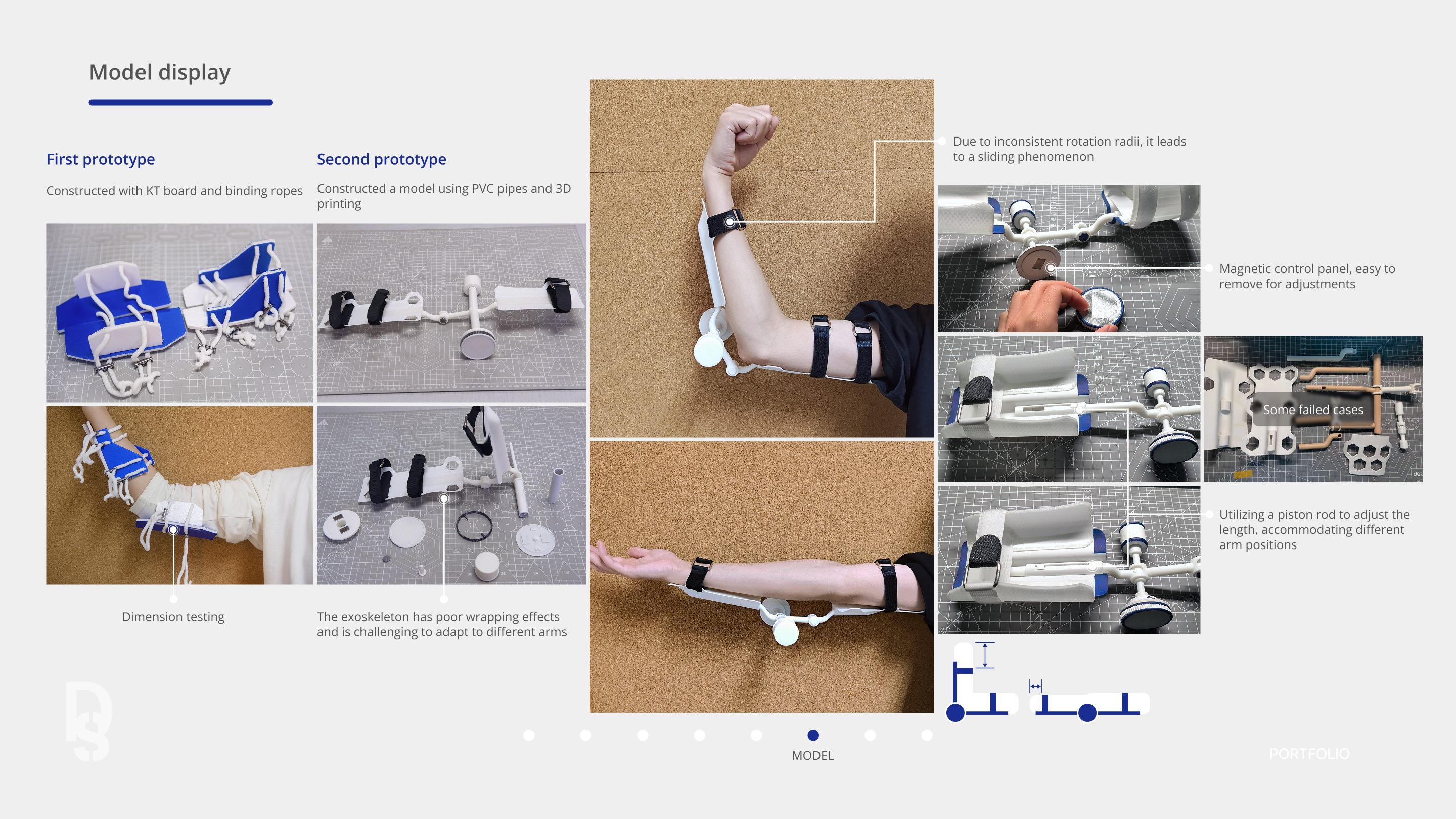
Prototypes
The first prototype was constructed with PVC pipes and 3D printing, but its wrapping effect was poor and hard to adapt to different arms. The second prototype uses a piston rod to adjust the length, accommodating different arm positions.
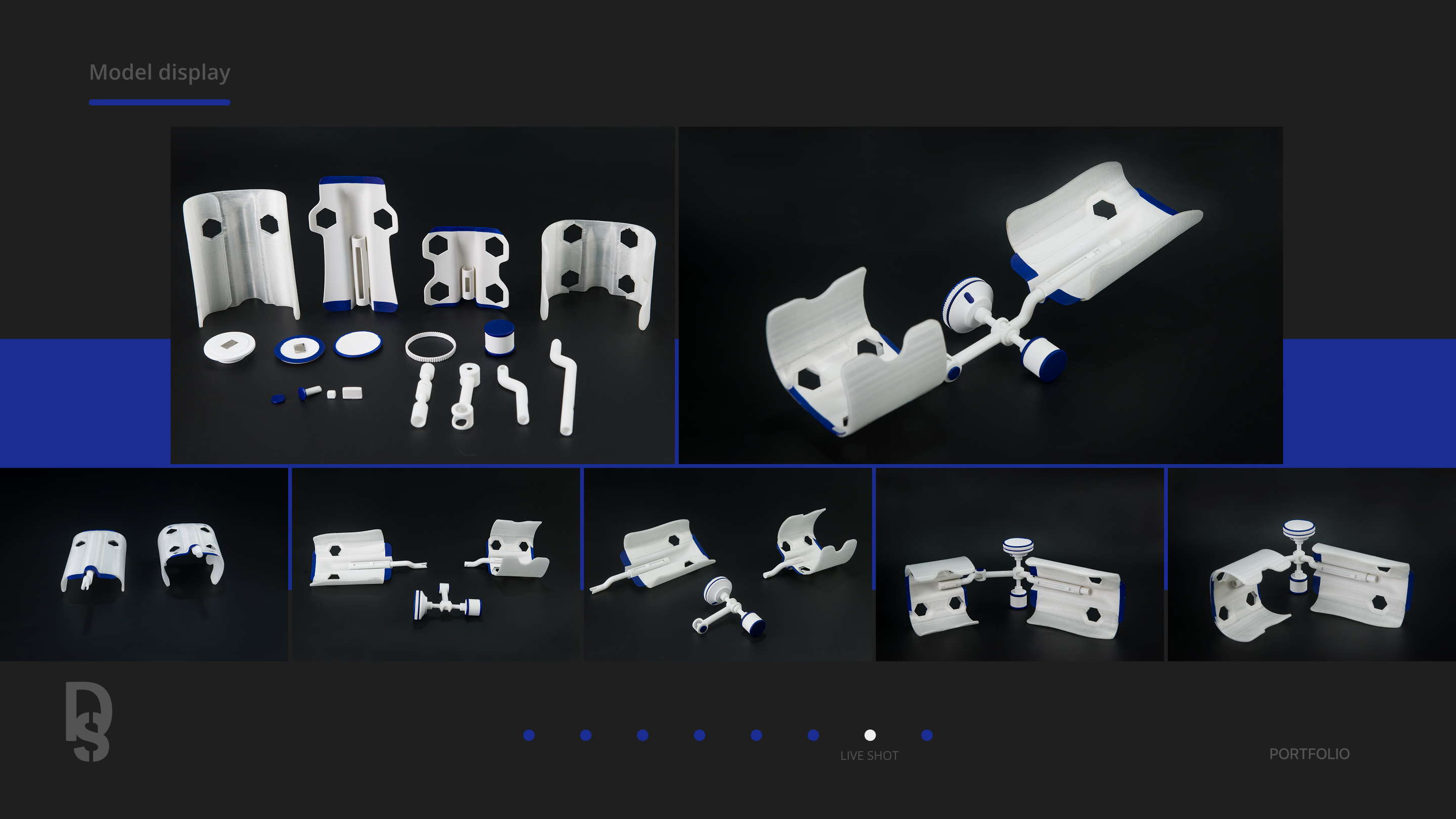
Model Display
The refined model displays the exoskeleton as a complete, wearable product.
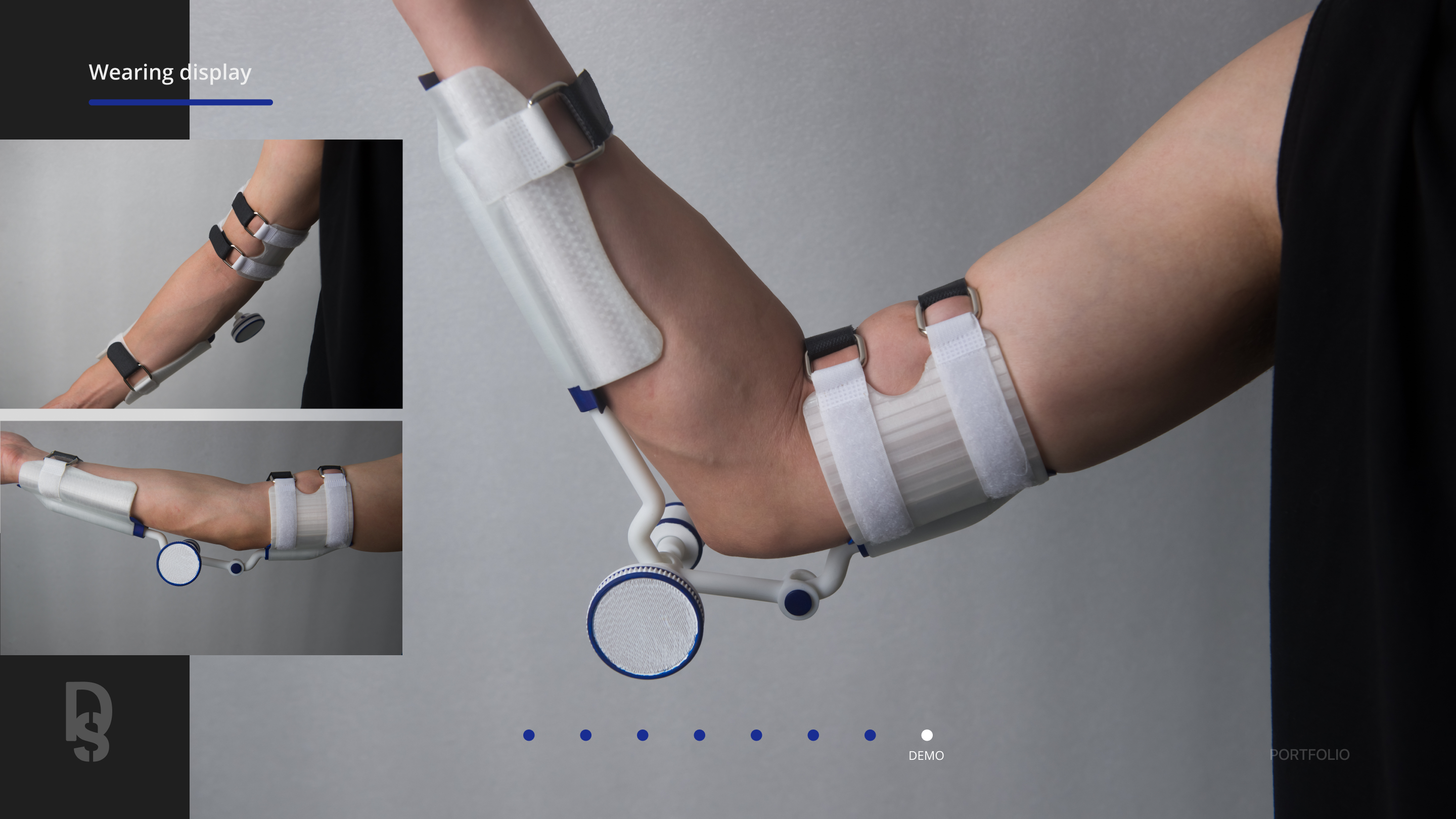
Wearing Display
The exoskeleton is shown worn on the arm, demonstrating the fit and the assist modes in use.
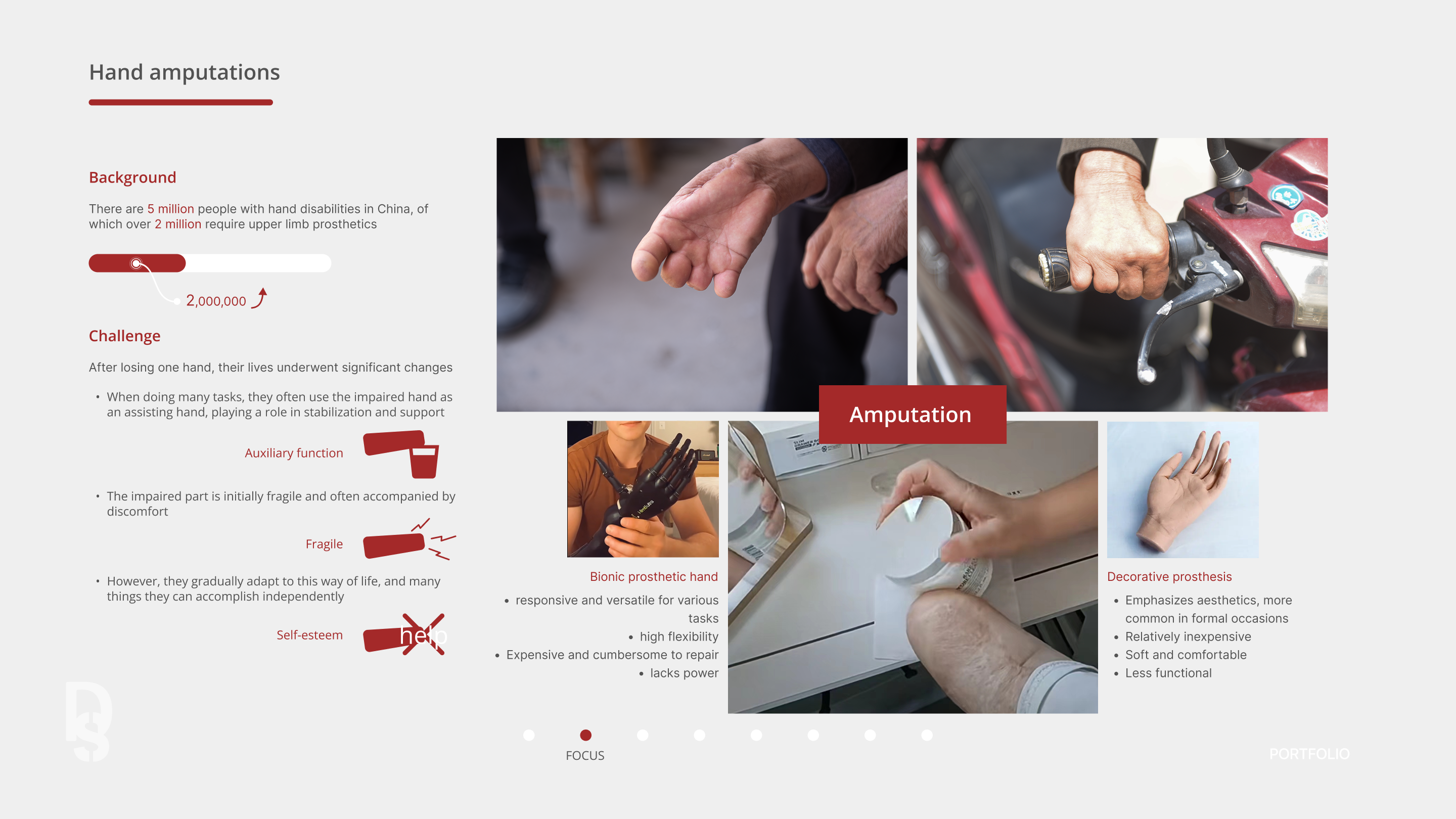
Prosthetic Background
Of the 5 million people with hand disabilities in China, over 2 million need upper limb prosthetics. Bionic hands are responsive but expensive and hard to repair; decorative ones look good but lack function — so the focus is ample power and reliability.
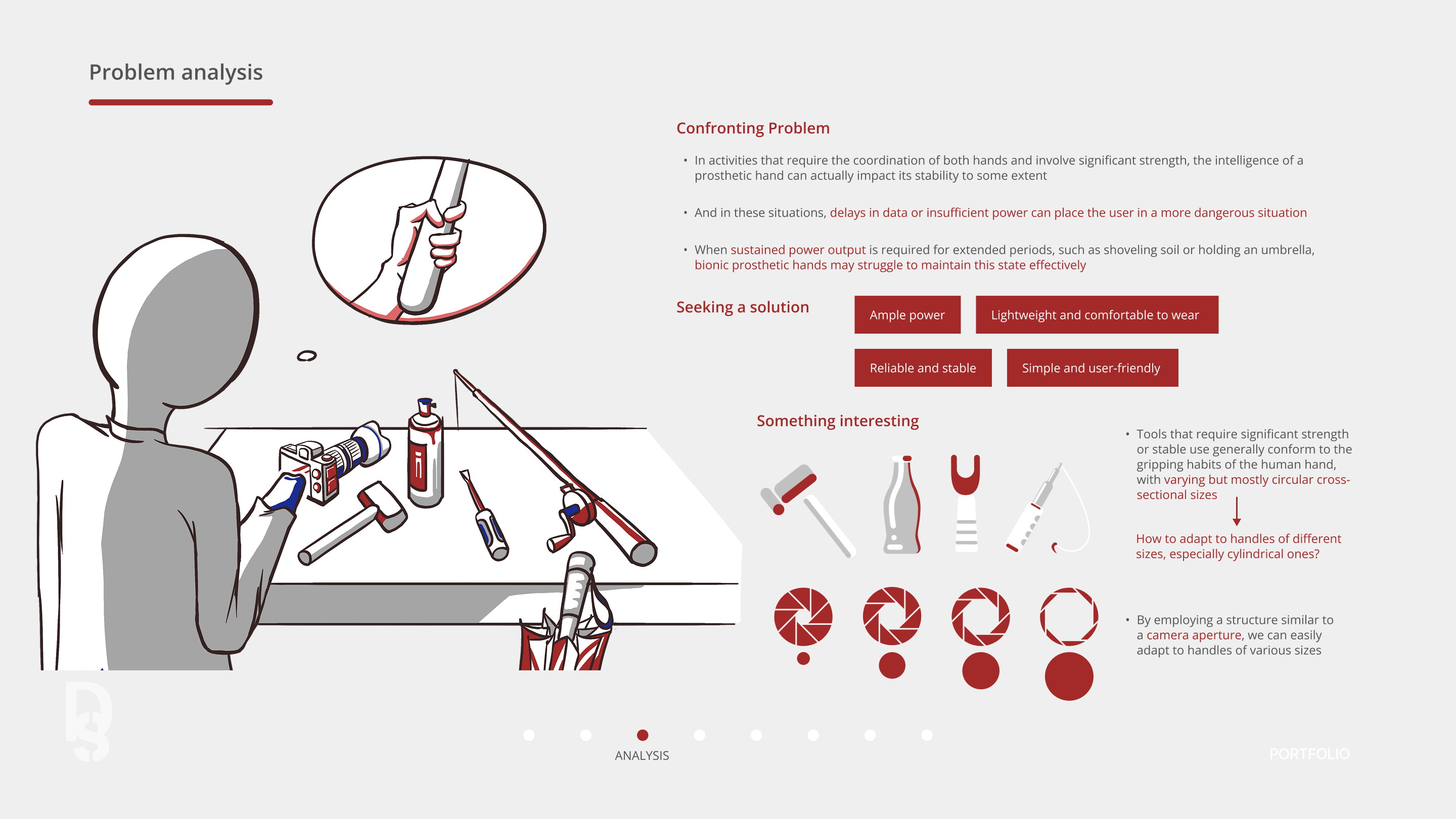
Problem Analysis
In two-handed, high-strength tasks, a smart hand's data delay or low power threatens stability and sustained output. The fix needs ample, reliable power in a light, simple device; since tool handles are mostly circular, a camera-aperture grip adapts to different sizes.
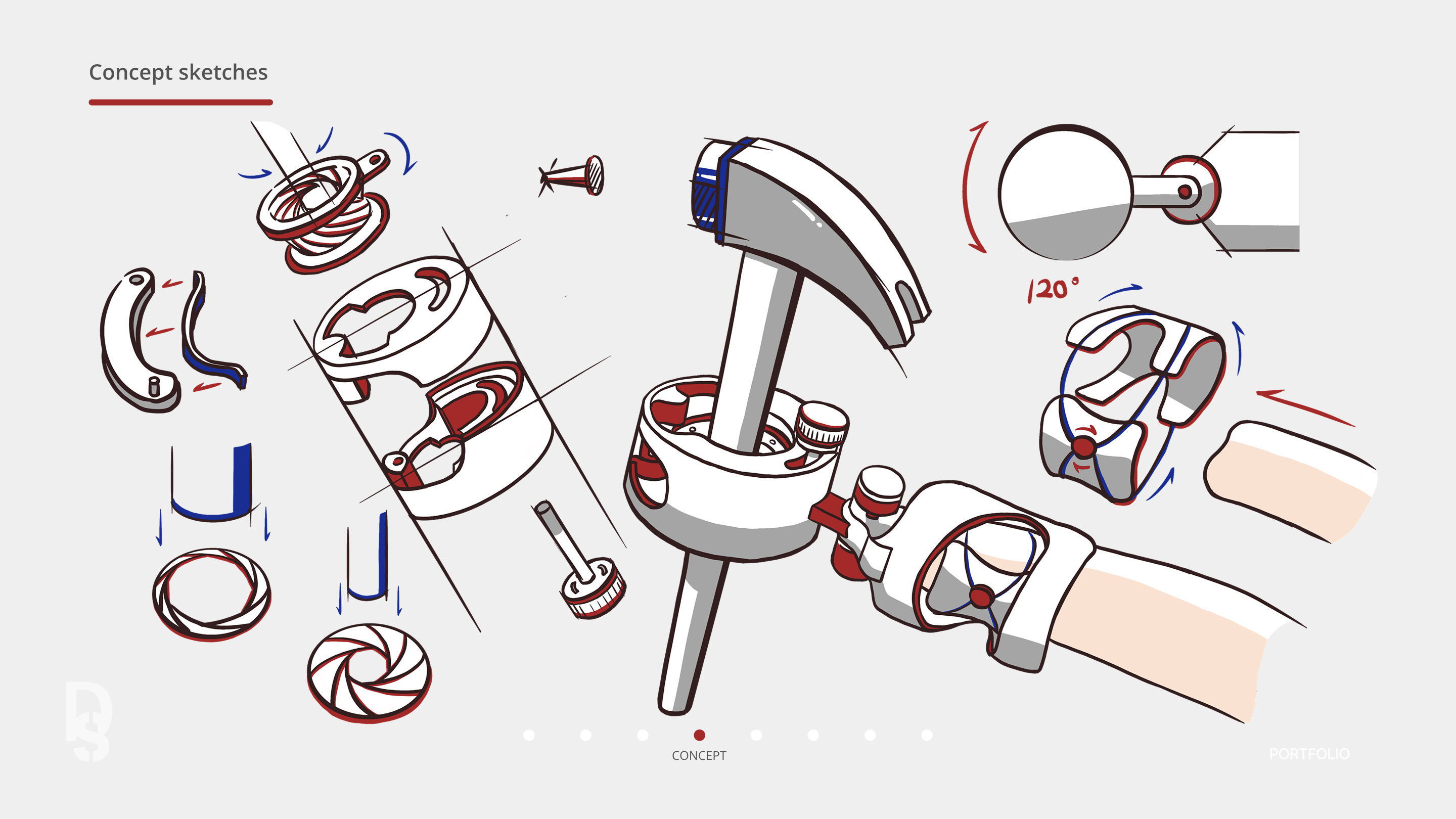
Concept Sketches
Concept sketches explored the prosthetic hand and its aperture-based grip.
Concept Presentation
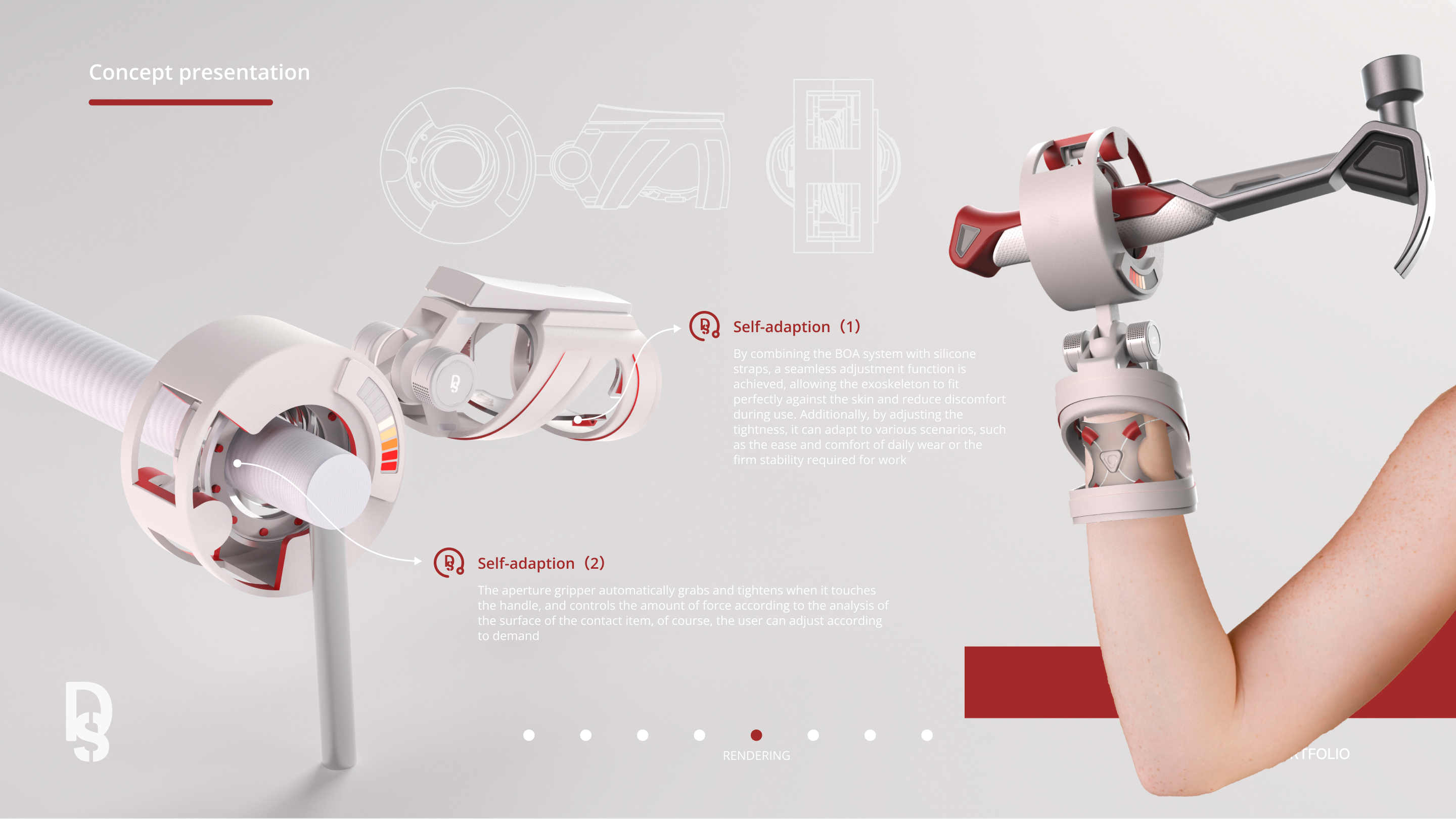
Self-adaption defines the concept: a BOA system plus straps lets the exoskeleton sit snugly for daily comfort or firm stability, while the aperture gripper tightens on contact and adjusts force by the handle surface.
Model Fabrication
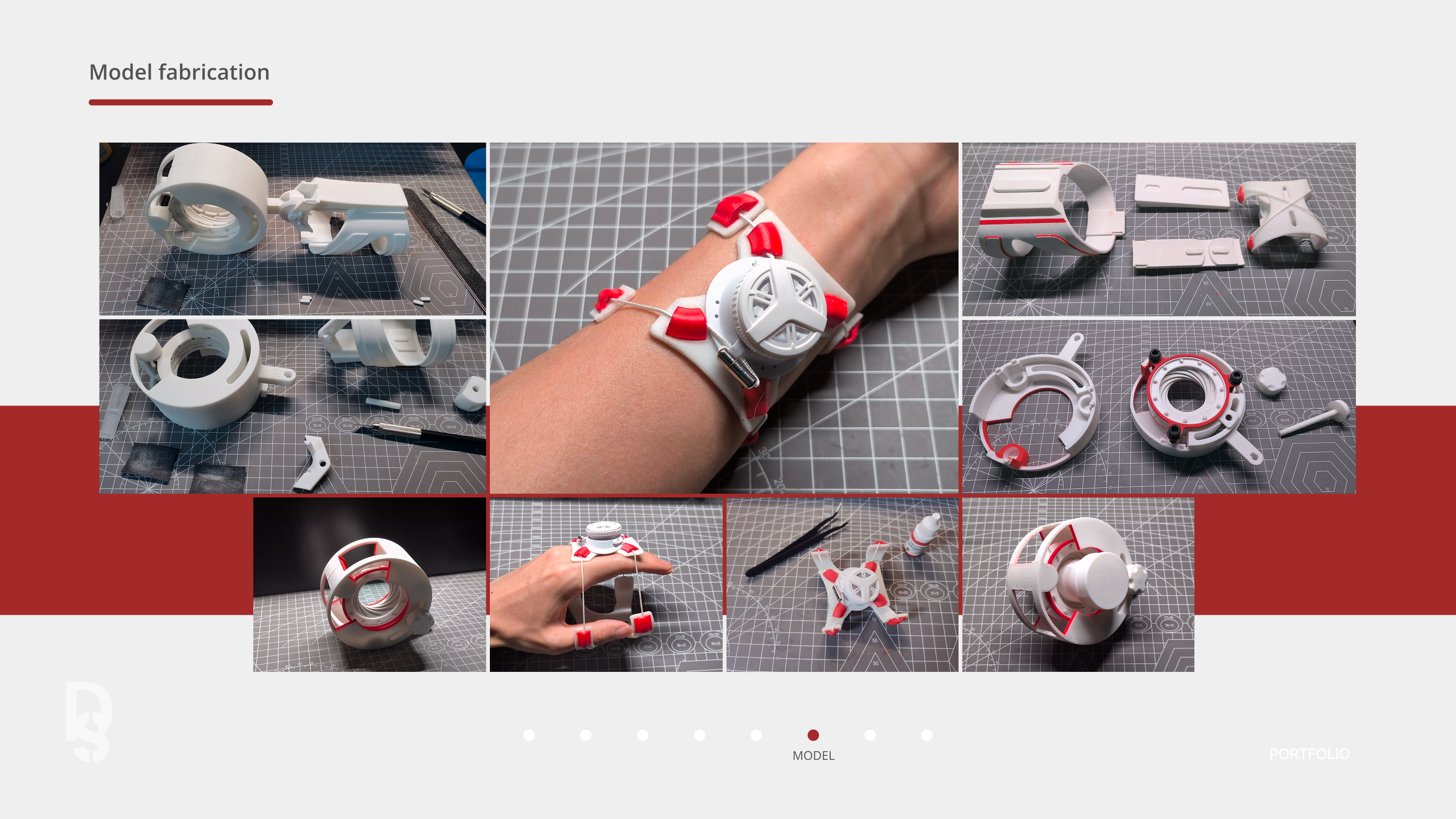
The prosthetic hand was fabricated as a physical model, testing the aperture mechanism and its assembly.
Model Display
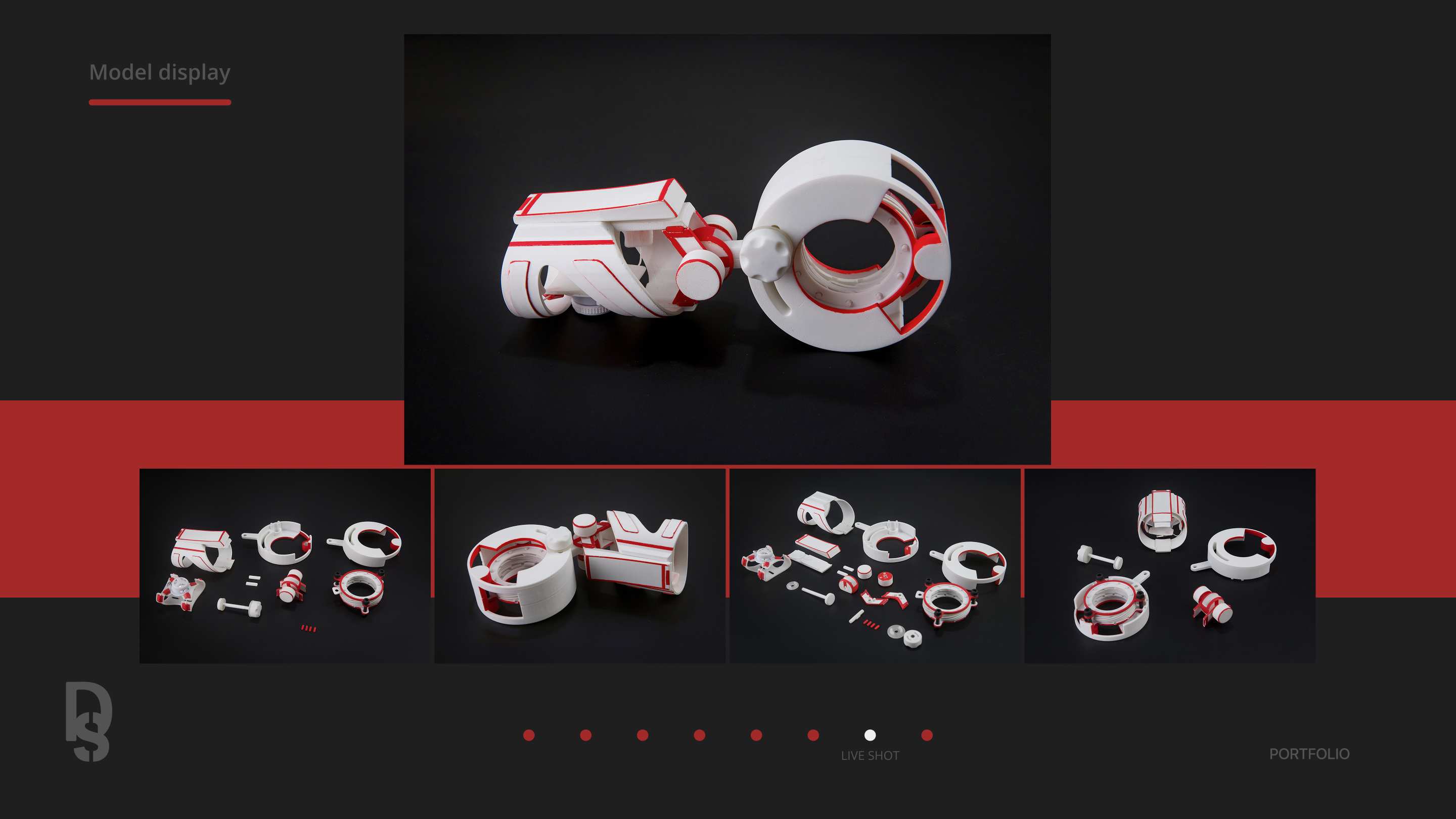
The finished model displays the adaptive prosthetic hand as a complete product.
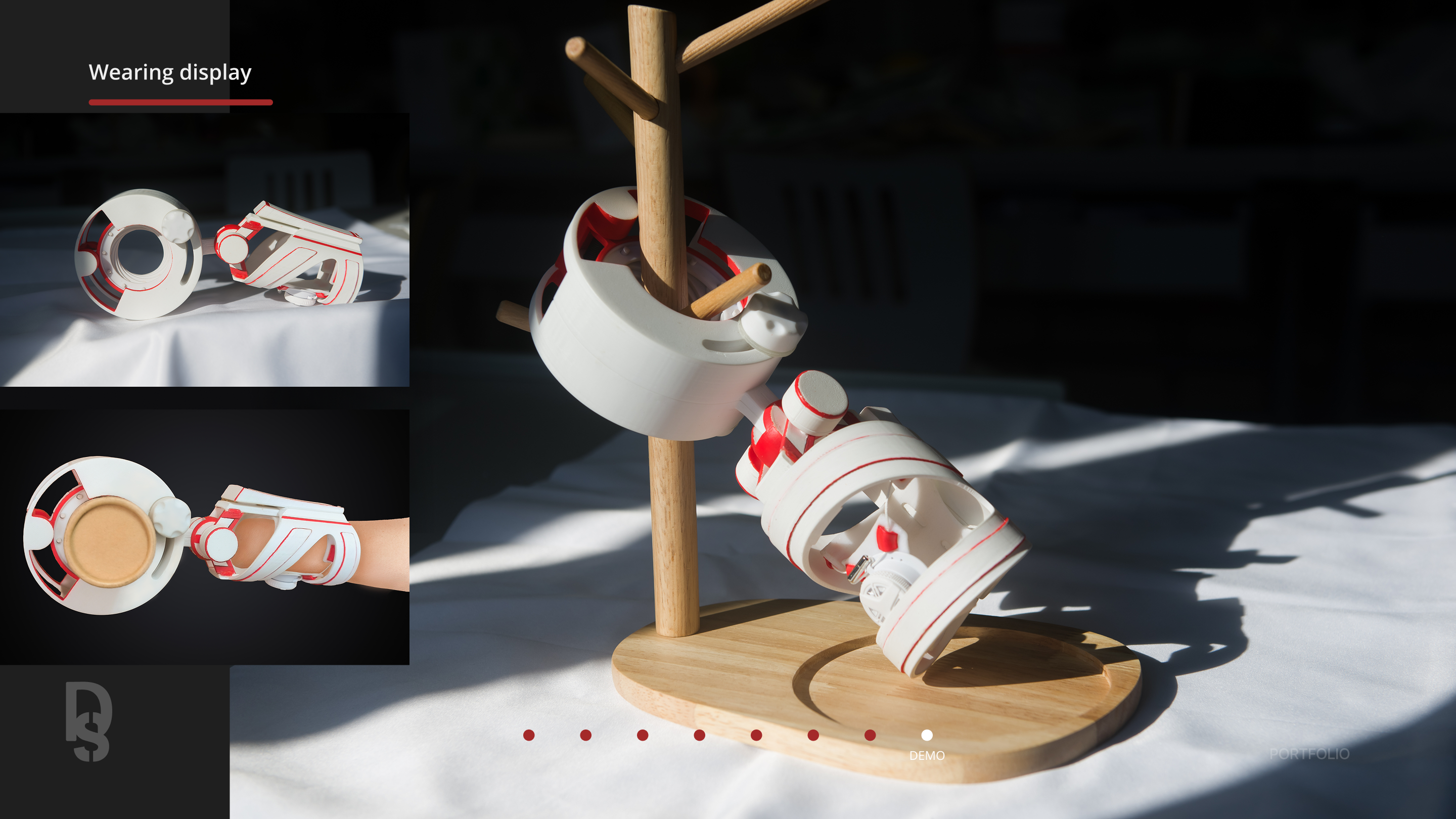
Wearing Display
The prosthetic hand is shown worn on the arm, demonstrating the aperture grip in use.